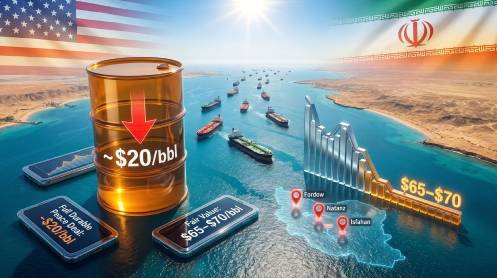
SINGAPORE: Global oil prices moved higher on Monday after Iran once again restricted shipping through the Strait of Hormuz and tensions resurfaced during the first round of U.S.-Iran talks held under an interim peace agreement.
Brent crude futures gained 54 cents, or 0.67 percent, to reach $81.11 per barrel by 0030 GMT, after touching an intraday high of $82.30. Meanwhile, U.S. West Texas Intermediate (WTI) crude rose $2.02, or 2.64 percent, to $78.62 per barrel ahead of the expiry of the July contract. The more actively traded August WTI contract advanced $1.43 to $77.28 per barrel.
Oil markets reacted after shipping activity through the Strait of Hormuz declined sharply on Sunday following Iran’s announcement that it had once again closed the strategic waterway. Tehran cited alleged Israeli and U.S. violations of the interim peace deal as the reason for the move.
“The market’s expectation of the Strait reopening appears to have been premature,” said Saul Kavonic, Head of Energy Research at MST Marquee. He noted that Iran is likely to continue using the waterway as leverage in its negotiations with the West.
Geopolitical uncertainty intensified after U.S. President Donald Trump warned that Washington could resume military strikes against Iran if necessary. The remarks came as U.S. Vice President JD Vance met Iranian officials on Sunday for the first formal discussions under the interim agreement. Tehran, however, accused Washington of failing to uphold commitments aimed at halting hostilities in Lebanon.
The situation in Lebanon remains fragile. Israeli airstrikes reportedly killed at least 20 people on Saturday, according to Lebanon’s state news agency, just one day after a ceasefire with Hezbollah came into effect.
“The ongoing instability in Lebanon poses a significant threat to both the ceasefire and the reopening of the Strait of Hormuz,” said Tony Sycamore, market analyst at IG.
Despite Monday’s gains, oil prices had fallen more than 8 percent last week amid expectations that supplies trapped in the Gulf would return to the market and that U.S. sanctions on Iranian oil exports could eventually be eased under a broader agreement.
Iranian oil exports have remained resilient, with more than 25 million barrels reportedly crossing the virtual blockade line since Monday, according to Hamid Bovard, head of the National Iranian Oil Company.
Meanwhile, regional producers including the United Arab Emirates, Kuwait, and Iraq have increased supply offers to customers over the past week. Iraq has also announced plans to gradually restore crude production to between 4.2 million and 4.3 million barrels per day, signaling the potential for additional supply in global markets.
Analysts expect oil prices to remain highly volatile as developments surrounding the Strait of Hormuz, U.S.-Iran negotiations, and regional security continue to influence market sentiment.
By Reuters